
I was watching an episode of The Suite Life of Zack and Cody recently (don’t judge me!), and there was a scene I found completely relatable. Cody is the overachieving twin who always needs everything to be perfect. He has to be brilliant at everything, or he considers himself a failure. Meanwhile, Zack is all about having fun and goofing off, although he’s intelligent in his own right.

In this particular episode, Zack and Cody are learning how to be troopers (through wilderness training, etc.). Zack excels at this, and Cody begins to feel like a failure. He then cheats and pretends to discover food in the wild when, in reality, he stumbles across a well-stocked house and is given the food.
When the leader of their group finds out, he’s disappointed, and Cody feels like an even bigger failure. Zack asks him why he lied, and Cody admits that not being good at something was weighing on him. Zack simply tells him to stop being so hard on himself. He points out that Cody can do a lot of things he can’t, and he doesn’t beat himself up over it.
Given I’ve just written three paragraphs about it, I was moved by the scene. So much of modern life is about flexing and putting down others for not having it all. Or worse, we pretend we have it all when in reality we’re suffering from the same imposter syndrome Cody has.

Perfectionism is sometimes viewed as a strength, but the harsh reality is that it’s a bad trait. It’s not unusual to want everything to fall into place perfectly; however, not being able to deal with things not going to plan is where problems start. This kind of behaviour can cause anxiety, depression and affect how well you sleep.
Signs that you’re being too hard on yourself
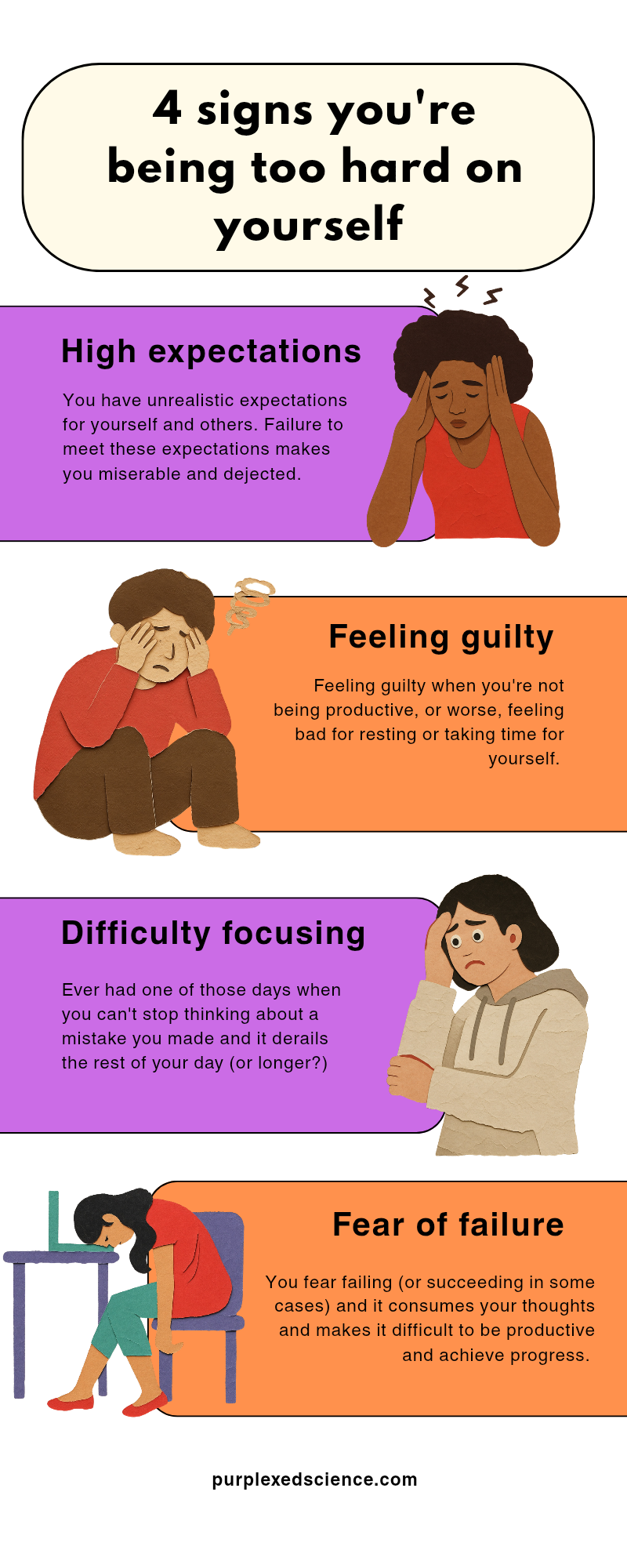
There are ways to tell if you’re being hard on yourself.
The most common ones are:
- Excessively thinking about mistakes you’ve made
- You blame yourself when things that are out of your control go wrong
- Constantly worrying about what people think about you
- Not challenging yourself because you think you’ll fail anyway
- Low self-esteem
- You had critical parents or caregivers, and you’ve internalised their words.
- You struggle with your mental health.
To anyone who needs to hear it:
How to stop being hard on yourself
I’m a card-carrying member of the Imposter Syndrome Society. And worse, I feel like I have to do everything right all the time. I was talking to my coworker about how I can’t stop until everything is done, and he told me to just take my time and breathe. He was right. The reality is that everything being done comes with anxiety and a lot of procrastination. I spend so much time worrying about being done that I don’t enjoy what I’m doing.
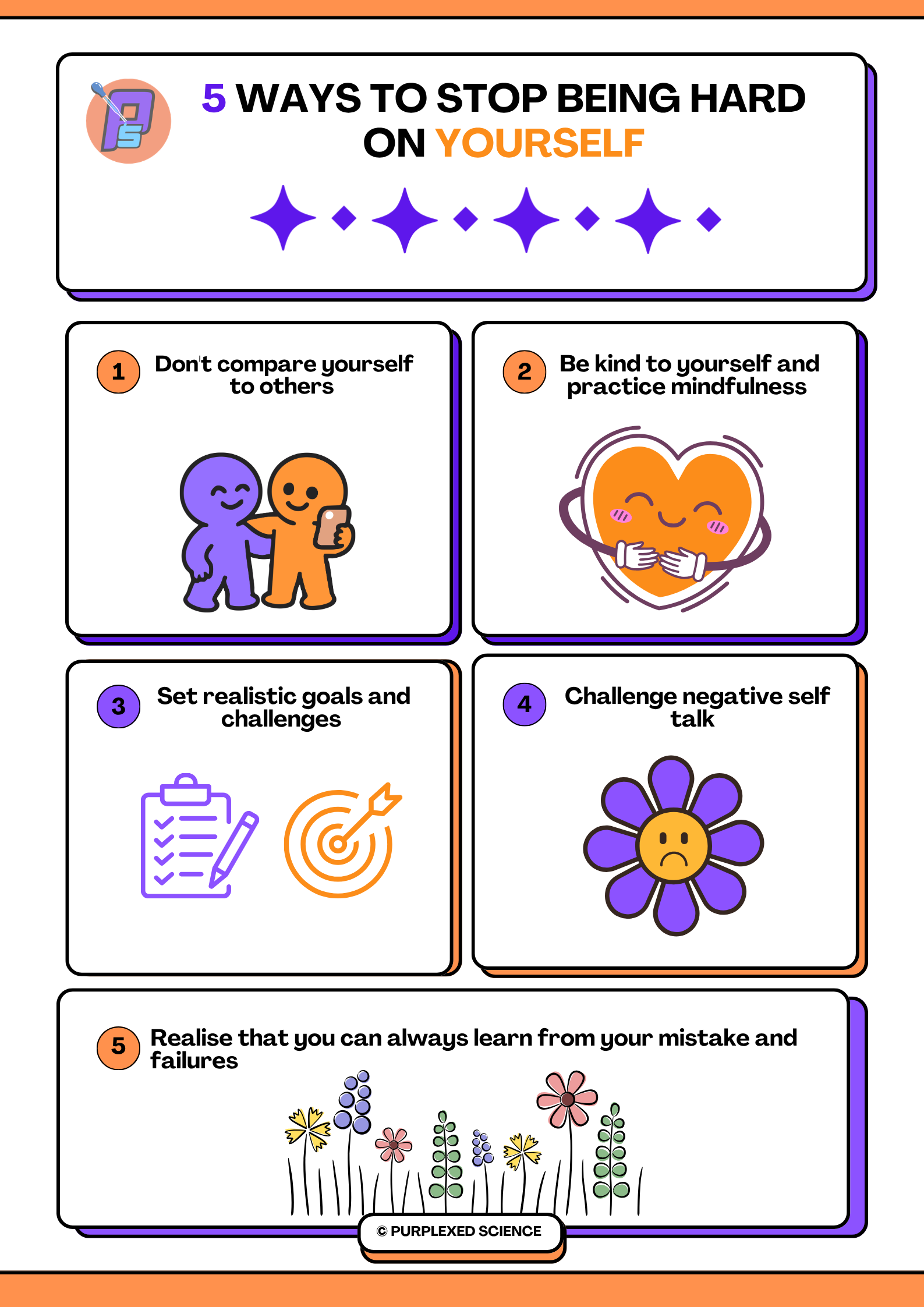
The best way to stop being hard on yourself is to pay attention to how you feel. If you’re experiencing high levels of stress, you’re more likely to fall into habits like excessive worrying about failures or expecting perfection. Give yourself time and space to make mistakes, and then use what you learn to grow and move forward.
Key takeaways:
- A lot of us are hard on ourselves.
- This is not healthy, but there are ways to change how you feel about yourself.
- Failure is not the end of the world, but an opportunity to grow as a person.

Sources:
All views expressed in this content are my own and do not reflect the opinions of any affiliated organisations. This post is intended for personal wellbeing and is not a substitute for professional medical advice. If you have concerns about your mental health or wellbeing, please seek guidance from a qualified healthcare provider.





 Purplexed Science
Leave a comment