
“Nothing in life is as important as you think it is, while you are thinking about it”
―Daniel Kahneman, Thinking, Fast and Slow
I came across this quote while listening to someone talk about how weeks of stress can be damaging in the long term. Can you remember the first time you became aware of being stressed? Stress seems to be a constant state of mind in today’s world. It’s become a punchline, almost. How many memes do you see a day about being stressed at work?

According to Locus Psyche, stress memes are ‘a great way to cope with anxiety and overwhelming everyday situations’. Stress is like an old frenemy that sneaks up from time to time. I often don’t realise I am dealing with increased stress until I’m hit by headaches, stomach pain and illness, and then I discover I’ve been overworking myself or not getting enough sleep.
What is stress?
According to the NHS, stress is:
the body’s reaction to feeling threatened or under pressure
When we are stressed, our body goes into fight or flight mode. This is an important function of the body – it alerts us to dangerous or harmful situations and allows us to react quickly. However, prolonged stress can cause a rapid increase in stress hormones.
The major stress hormones are
- Adrenaline, which triggers the fight or flight response and causes increased heart rate and blood pressure.
- Cortisol: produced by the adrenal glands and plays a role in regulating metabolism, reducing inflammation and the body’s response to stress. High levels of cortisol can cause weight gain, fatigue, insomnia, high blood pressure and mood changes.
- Noradrenaline: Part of the fight-or-flight response; increases blood pressure.
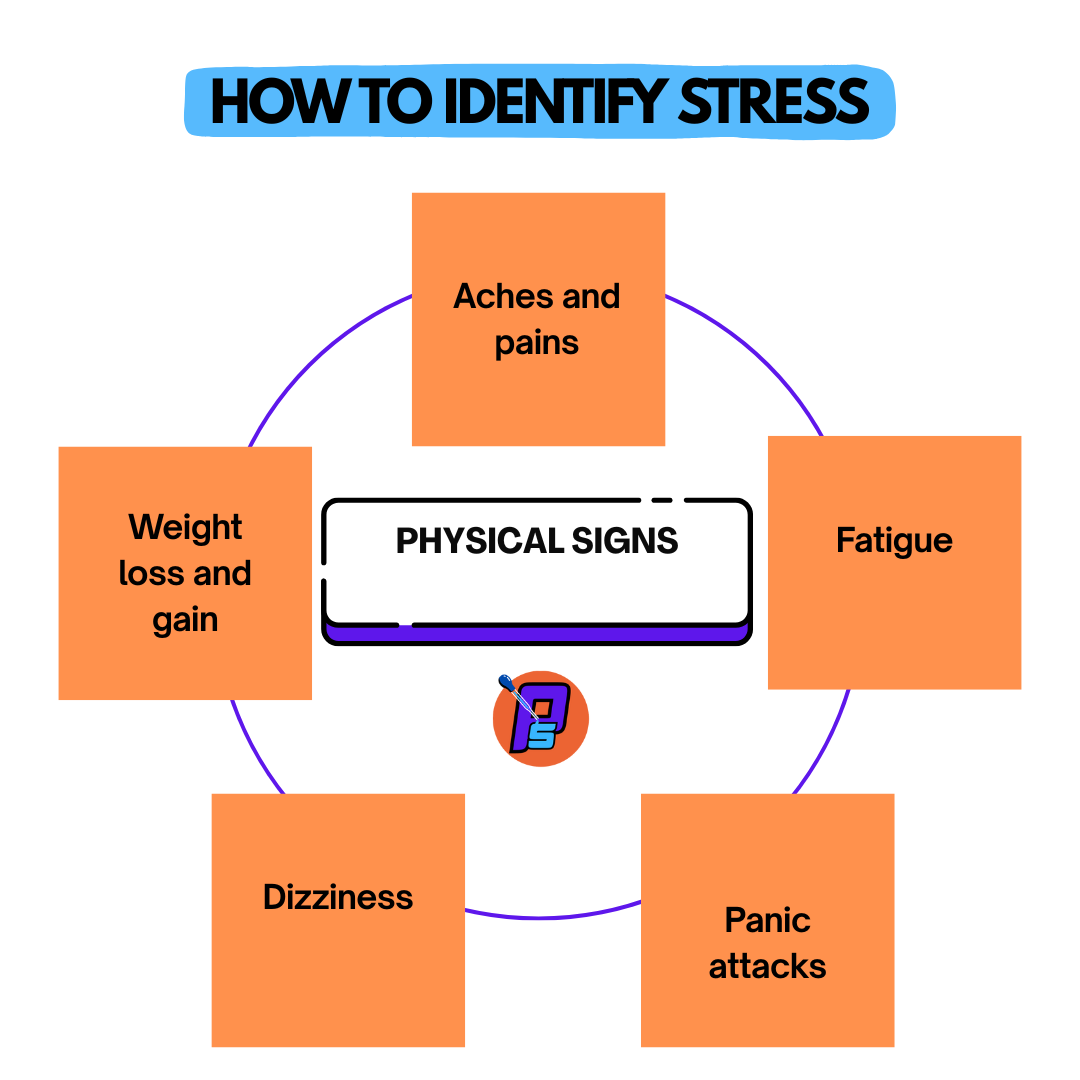
Signs and symptoms of stress
- Muscle weakness
- Fatigue
- High blood pressure
- Weight gain
- Hair loss
- Weight loss
- Trouble sleeping
- Headache
- Brain fog
- Short-term memory loss
What causes stress?
Stress can be caused by work, abuse, education, housing issues, family issues such as divorce and bereavement, illness and money problems. Positive things can also be a sign of stress, like getting a new job, moving to a new house, going on holiday and the festive period. Someone may feel stressed when going through a major life change, or they may feel they don’t have control. Shouldering a lot of responsibilities or not having enough to do can also lead to stress.
How stress impacts daily life
Stress can lead to a loss of earnings, limited productivity, depression, illness, poor sleep quality and burnout. Stress is linked to past experiences and self-perception. If you feel like you’re not good enough, and that you can’t change your situation, you are bound to feel more stressed. This can also be affected by a lack of support system, or not having enough time or money to resolve the stressful circumstances. Stress manifests differently in everyone, making it unhelpful to compare yourself to other people.

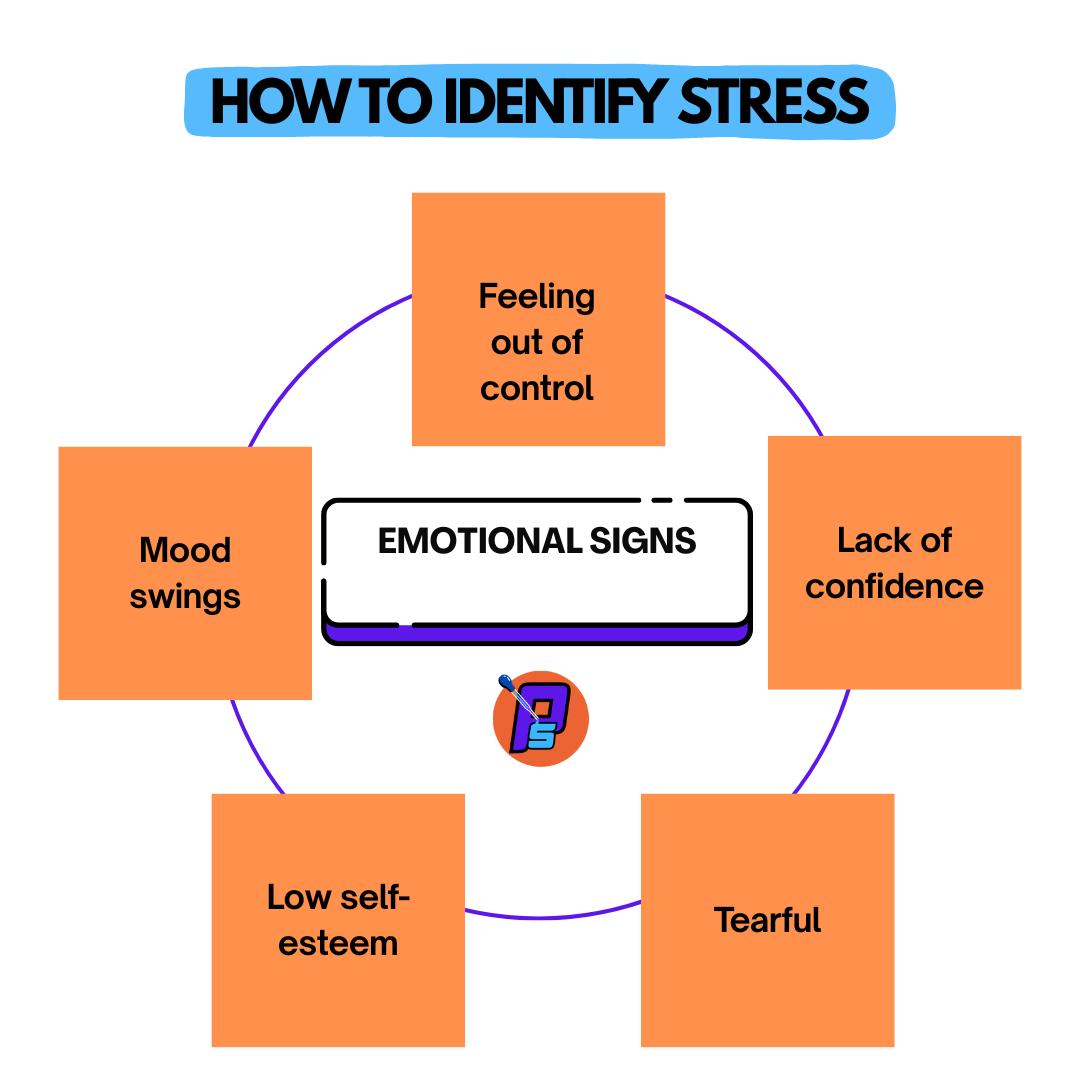

A YouGov study in 2018 found that, 46% people ate too much or consumed unhealthy food because of stress. 37% adults reported feeling lonely due to stress while 29% said they either began or increased drinking alcohol, with 16% admitting the same with smoking. Over half of adults said they felt depressed, while 61% said they felt anxious due to stress. This shows that stress is far-reaching and affects all of us at some point. It highlights the importance of being aware of what causes stress and how to improve it.

How to manage and treat stress
There are treatment options for stress such as:
Talking therapy
Medication
Complementary and alternative therapies
It is best to speak to your GP or physician if you are stressed and struggling to cope.
Other ways to manage stress include:
- Setting achievable targets and goals
- Taking breaks when necessary
- Asking for help
- Accept that you can’t change everything
- Be kind to yourself
- Relax
- Take up a hobby or physical activity (if able)
- Use a mental health apps
- Find support at your place of employment or study
- Talk to people who have a similar experience
It can be easy to feel overwhelmed and hopeless when dealing with stress. Recognising how you’re feeling is often the first step. With time and patience, there are ways to combat stress so that you feel better. It may not happen overnight, and it may not be easy, but small steps can guide you towards regaining a sense of calm.

- Causes of Stress – Mind
- Explore Mental Health – Mental Health Foundation
- Mental Health Statistics – Mental Health Foundation
- Norepinephrine – Science Direct
- Science Focus on High Cortisol Levels
- Stress – Mind
- Stress Hinders Pregnancy – Invitra
- Stress Memes – Locus Psych
- Stress.org.uk
- Tips to Reduce Stress – NHS


 Purplexed Science
Leave a comment